

With the development of automotive lightweighting technology, carbon fiber materials are increasingly used in high-performance cars and the aftermarket. Among them, the front fender, as an important component of body panel, has become one of the most common carbon fiber aftermarket parts. According to the manufacturing process, carbon fiber front fenders are mainly divided into dry carbon fiber fenders and wet carbon fiber fenders. Although both are made of carbon fiber, there are big differences in production processes, performance, weight control and cost.
What is a dry carbon fiber front fender?
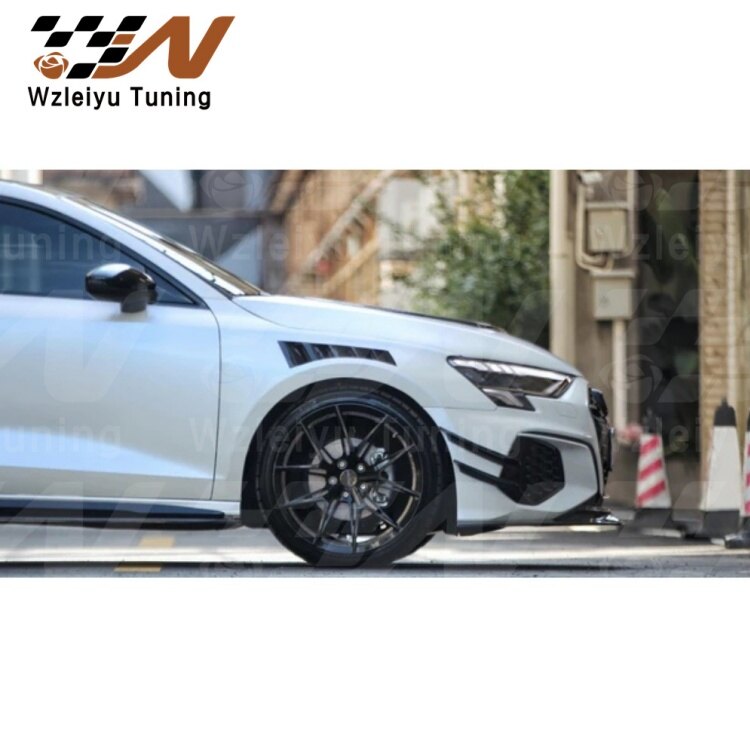
Dry carbon fiber front fenders are usually manufactured using a a prepreg process. During production, carbon fiber fabric is impregnated with precision resin, then placed in a mold, sealed in a vacuum bag and placed in an an autoclave for heat curing treatment, according to the design. At high temperature and pressure, the resin penetrates the fiber completely and drains out excess air, forming a dense, strong composite material.
Due to the high the autoclave molding process, dry carbon fiber products have higher fiber fiber content and lower resin content, so they are lighter in weight while maintaining strength and stiffness. In addition, the carbon fiber structure on the surface of dry carbon fiber products is more uniform, and the appearance and texture are closer to the original carbon fiber components used in racing cars and supercars.
What is a wet carbon fiber fender?
Wet carbon fiber fenders are mainly produced by hand laying or vacuum infusion processes. During the manufacturing process, carbon fiber cloth is laid on the surface of the mold and then liquid resin is cured by hand or using equipment.
The process equipment has low investment and short production cycle. It is widely used in automotive aftermarket parts and small andmedium batch production. Because the resin impregnation process is difficult to achieve complete uniformity, the product may have air bubbles and resin accumulation, resulting in overall performance is generally lower than dry carbon fiber products.
The main difference between dry and wet carbon fiber fenders is that the manufacturing process is different.
Dry carbon fiber adopts prepreleaching and autoclave curing processes, which requires high production environment, equipment and process control. Wet carbon fiber mainly relies on manual lay-up and resin impregnation, which makes the production process relatively simple.
Weight difference
Dry carbon fiber products have lower resin content, higher fiber utilization, and are generally lighter than wet carbon fiber front fenders of the same size and construction.

Difference in strength and hardness
Dry carbon fiber solidifies under high temperature and pressure, making its internal structure more compact, tensile strength, flexural strength and overall stiffness. For high-performance vehicles that prioritize track performance and handling, dry carbon fiber components offer significant advantages.
Aesthetic Quality Differences
Dry carbon fiber products feature more regular carbon fiber weave and smoother surfaces for better visualization. Wet carbon fiber products may exhibit localized weave deformation, resin buildup or surface ripples.
Significant Cost Differences
The high-pressure autoclave equipment, preleaching and strict production process make dry carbon fiber front fenders more expensive to manufacture, resulting in a significantly higher market price than wet carbon fiber products. Wet carbon fiber production process is relatively simple, more suitable for limited budget aftermarket users.
How to choose the right Carbon Fiber front panel
carbon fiber front front fenders are definitely a better bet for users looking for ultimate lightweighting, tracking performance and premium quality. They have significant advantages in weight, strength and appearance, making them widely used in racing, high-performance cars and the high-end aftermarket.
For consumers focused on everyday use or value for money, wet carbon fiber fenders also meet aesthetic upgrades and a degree of weight loss, while offering lower purchase costs.